Showing posts with label Brain Pickings. Show all posts

Friday, April 25, 2014

Week #3 & #4, National Poetry Month

     For the uninitiated, there exists many poetic forms in the reading world: To name a few––Haiku, Triolet, Concrete, Acrostic, Ballad, Sonnet, Prose, Sestina, Villanelle, Confessional, Free Verse––and the list continues as you walk the courses of time and country. I enjoy discovering new forms, and yes, new forms appear with frequency.
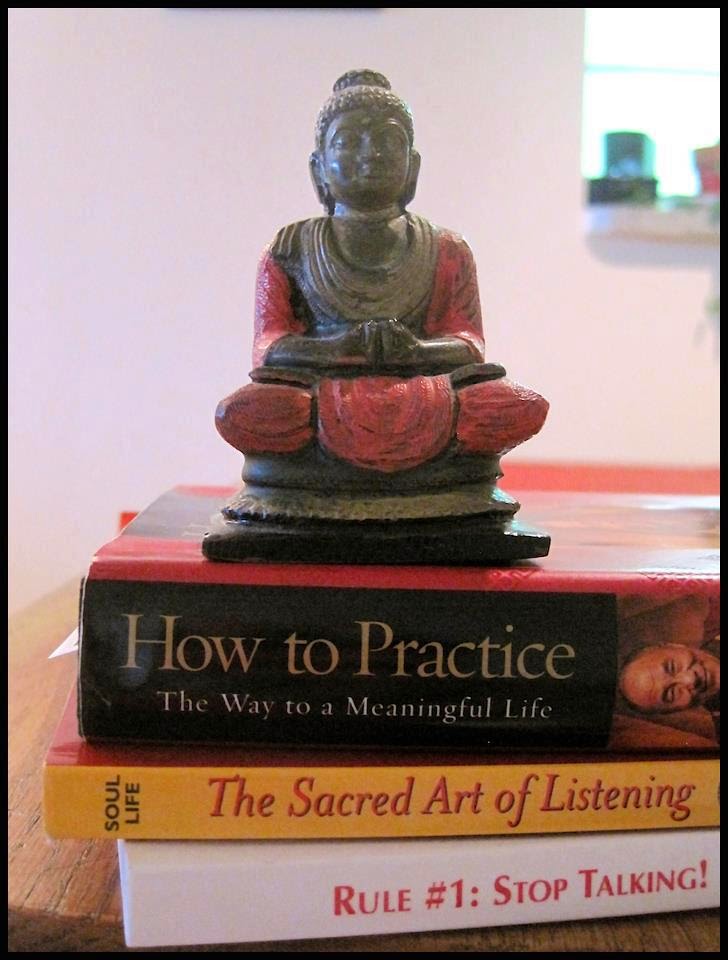
     Within this National Poetry Month, I found this new form: Book Spine Poetry.
     It started in 1993 with Nina Katchadourian's Sorted Books Project. Katchadourian began collecting interesting titles and arranging them in clusters so the spines could be read like a sentence. Maria Popova of Brain Picking adapted the spine sentences into poetry, and the idea quickly spread. Googling the topic will bring you pages of entries to consider. View Forbes Library, which conducts annual Book Spine Poetry Contests for a myriad of results.
     I challenged my writing group to come up with some of their own. They found it wasn't as easy as it first appeared, but did find it an interesting and fun concept. Here are two from my hand.


Below is the Forbes Library 2013 winner in the Adult Category by Linda Eve Diamond.

     The last few weeks have been personal busy/busy––all in good ways. However, it meant I would have to compress two Blog weeks into one. Book Spine Poetry addresses the third week of National Poetry Month, and for this last week of a wonderful poetry-reading month, I inform you that from the purchase of poetry books I recently bought from The Book Exchange (see Week #2, NPM)––I delved into Collected Poems of Sylvia Plath.
     I am an Apiarist. Imagine my surprise when I found that beekeeping was the subject of many of her poems. (Plath's father and her husband (Ted Hughes) kept bees.)
     What about you trying your hand at Book Spine Poetry? I've provided means of finding what's it's all about––so go ahead, try it. As the saying goes, you might like it.

Friday, April 12, 2013

Atwood's 10 Rules of Writing

     Last week I shared Sol Stein's "Ten Commandments for Writers,"(Stein on Writing). A reader of that Blog post, emailed to me a for-your-interest website, Brain Pickings. I was smitten with the multitude of informational nuggets found there––and, those of you who know me, know how adrenalin pumped I become with discovering new things (view 1/4/2013 Blog Post Intriguing Resources).

In the winter of 2010, inspired by Elmore Leonard’s 10 rules of writing published in The New York Times nearly a decade earlier, The Guardian asked some of today’s most celebrated authors to each produce a list of personal writing commandments. After 10 from Zadie Smith and 8 from Neil Gaiman, here comes Margaret Atwood with her denary decree:
  1. Take a pencil to write with on aeroplanes. Pens leak. But if the pencil breaks, you can’t sharpen it on the plane, because you can’t take knives with you. Therefore: take two pencils.  
  2. If both pencils break, you can do a rough sharpening job with a nail file of the metal or glass type. 
  3. Take something to write on. Paper is good. In a pinch, pieces of wood or your arm will do.
  4.  If you’re using a computer, always safeguard new text with a ­memory stick.
  5. Do back exercises. Pain is distracting.
  6. Hold the reader’s attention. (This is likely to work better if you can hold your own.) But you don’t know who the reader is, so it’s like shooting fish with a slingshot in the dark. What ­fascinates A will bore the pants off B.
  7. You most likely need a thesaurus, a rudimentary grammar book, and a grip on reality. This latter means: there’s no free lunch. Writing is work. It’s also gambling. You don’t get a pension plan. Other people can help you a bit, but ­essentially you’re on your own. ­Nobody is making you do this: you chose it, so don’t whine.
  8. You can never read your own book with the innocent anticipation that comes with that first delicious page of a new book, because you wrote the thing. You’ve been backstage. You’ve seen how the rabbits were smuggled into the hat. Therefore ask a reading friend or two to look at it before you give it to anyone in the publishing business. This friend should not be someone with whom you have a ­romantic relationship, unless you want to break up.
  9. Don’t sit down in the middle of the woods. If you’re lost in the plot or blocked, retrace your steps to where you went wrong. Then take the other road. And/or change the person. Change the tense. Change the opening page.
  10. Prayer might work. Or reading ­something else. Or a constant visual­ization of the holy grail that is the finished, published version of your resplendent book.
Two distinguished writers in just as many weeks. I hope you have sorted what's important for you and your writing. Thanks for visiting, and please let me know if you've been influenced by another writer's rules.